
Winter in Indiana brings plenty to look forward to, from sledding and ice skating to hot chocolate by the fire. But behind the wheel, cold weather presents a whole different set of challenges. Snow, sleet, freezing rain, and icy roads can turn a routine commute into a high-risk situation fast.
Whether you are a new driver or a seasoned Hoosier behind the wheel, preparing for winter weather is essential. Before the 2026–2027 winter season gets underway, review these tips to help keep yourself, your passengers, and other motorists safe. After all, safer drivers make safer roads.
ASSESS THE WEATHER AND ROAD CONDITIONS
Our number-one tip for safe winter driving? Know what you are getting into before leaving home. Check the weather forecast, your route, and current road conditions before getting behind the wheel. Indiana weather can change quickly, and a clear morning can turn into an afternoon of snow, freezing rain, or reduced visibility.
If conditions are dangerous, postpone nonessential trips whenever possible. Give yourself extra time to reach your destination, and remember that arriving late is better than not arriving safely at all.
PREPARE YOUR VEHICLE BEFORE WINTER ARRIVES
Regular vehicle maintenance is important year-round, but cold weather makes preparation even more critical. Check your tire tread and pressure, replace worn windshield wipers, top off winter-rated windshield washer fluid, and have your battery, lights, brakes, belts, hoses, and cooling system inspected.
Cold temperatures can reduce battery performance and tire pressure. Follow the tire pressure recommendations in your owner’s manual or on the driver’s side door-frame label. Keep your gas tank at least half full whenever possible. EV drivers should monitor battery charge and plan for reduced range in cold temperatures.
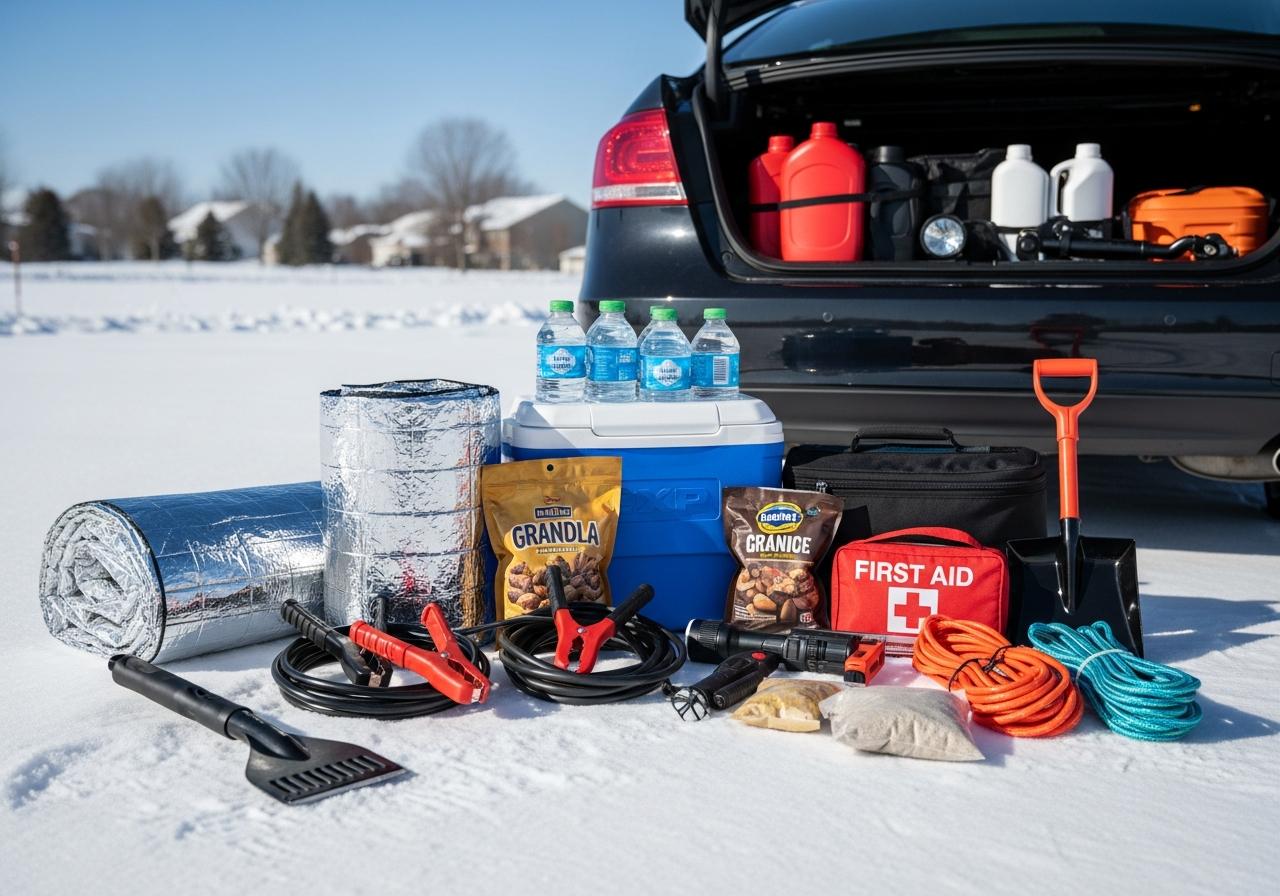
It is also wise to keep winter emergency items in your trunk. Consider including:
| Essential Item | Educational Purpose & Function |
|---|---|
| Ice Scraper & Snow Brush | Restores 360-degree visibility before starting any trip. |
| Coarse Cat Litter or Sand | Provides immediate tire traction when stuck on ice or packed snow patches. |
| Blanket, Gloves & Beanie | Retains body heat if stranded while waiting for roadside assistance. |
| Flashlight & Extra Batteries | Aids visibility during nighttime vehicle checks or breakdown situations. |
| Jumper Cables / Portable Starter | Addresses cold-weather battery drain (car batteries lose up to 35% strength at freezing). |
| Phone Charger & Bottled Water | Maintains emergency communication and hydration during extended delays. |
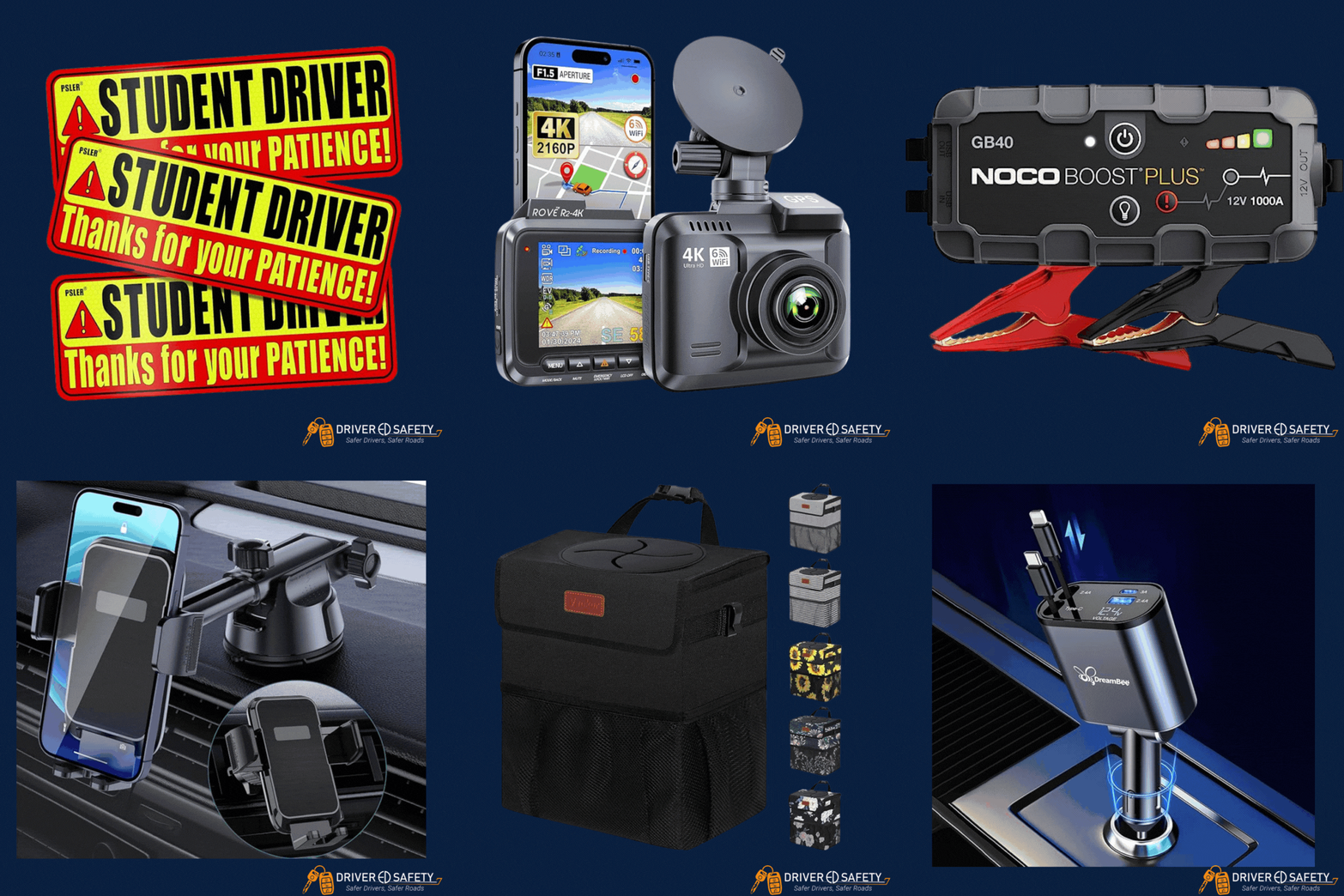
These supplies can make a significant difference if you become stranded or experience a breakdown during a winter storm. You can find some of these winter driving essentials on our Amazon Products page to help you get prepared!
CLEAR ALL SNOW AND ICE BEFORE YOU DRIVE!
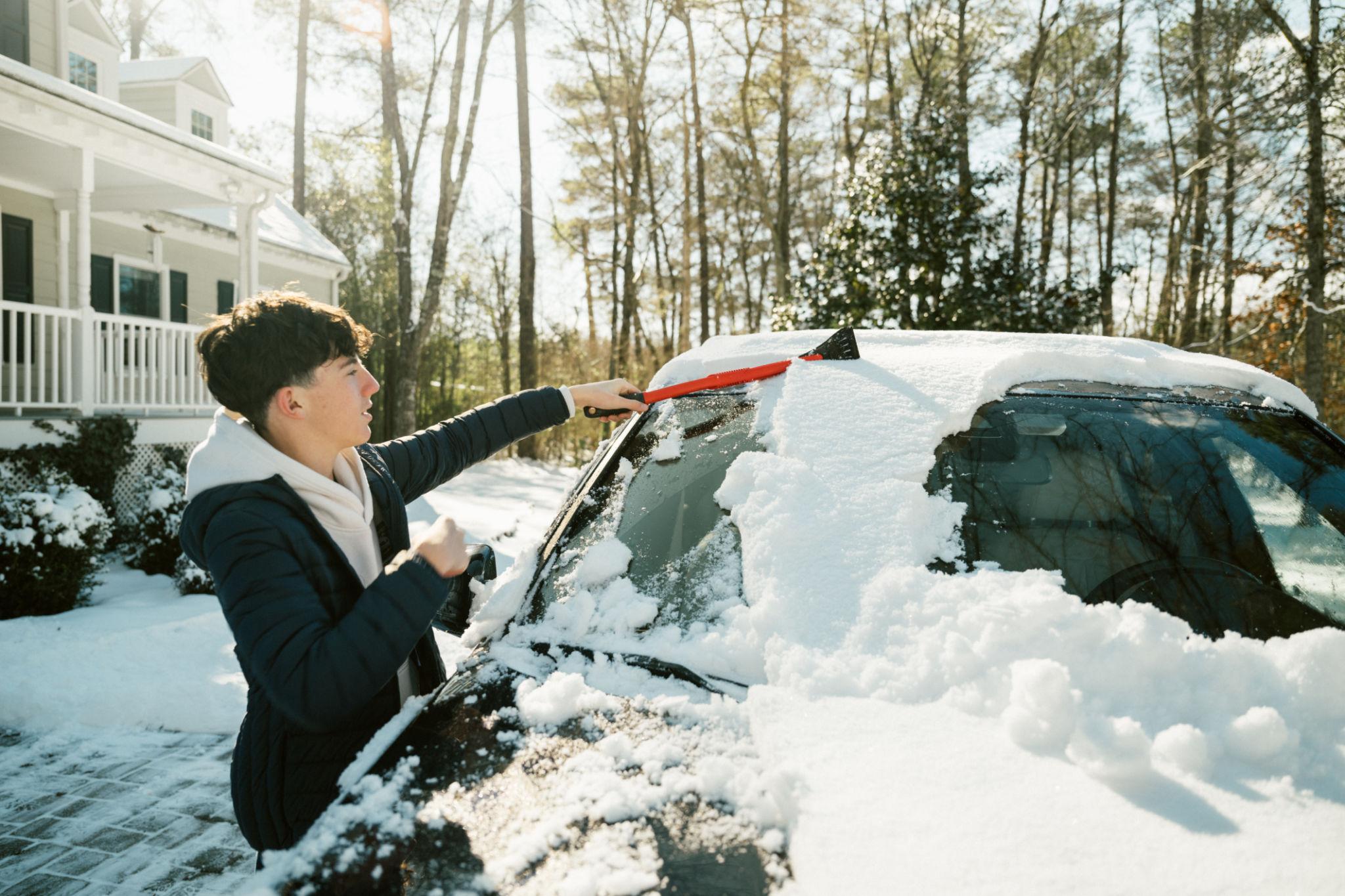
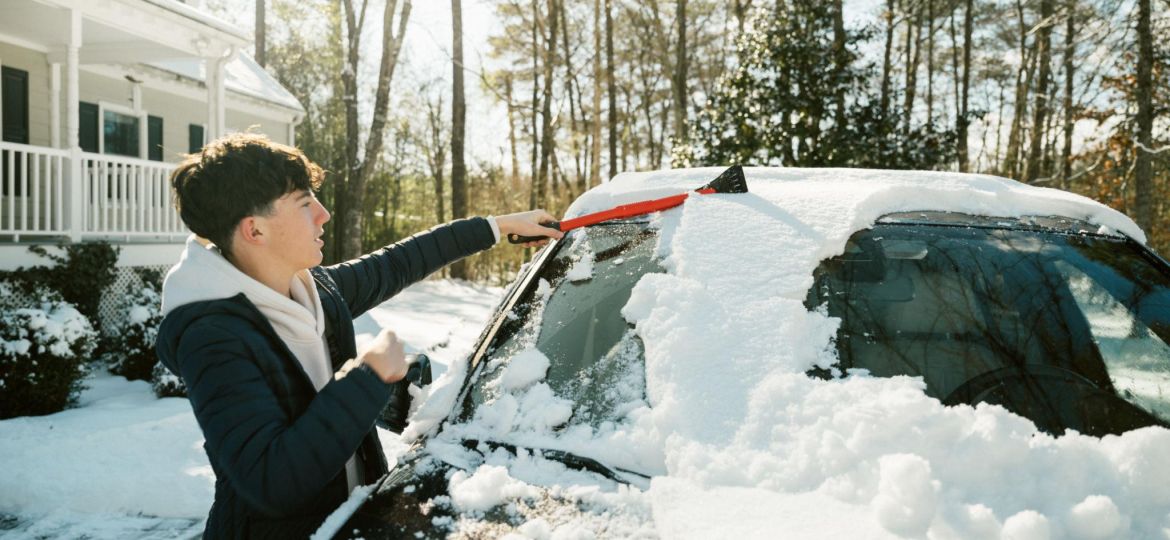
Before hitting the road, grab your snow brush and ice scraper! Clear snow and ice from all windows, mirrors, lights, and signals so you can see and other drivers can see you.
Don’t forget the roof, hood, and trunk! Snow flying off your car can block your view or create a severe hazard for drivers behind you.
Turn on your front and rear defrosters and wait until your windows are completely clear. Never drive with just a small spot scraped on your windshield! Plan to leave a few minutes early on winter mornings.
SLOW DOWN AND DRIVE FOR THE CONDITIONS!
Snow, sleet, freezing rain, and black ice can make roads slippery, even when they look clear. Watch out for bridges, overpasses, and shaded areas because they can freeze first.
When roads are slippery:
- Slow down and leave extra space between you and the car ahead.
- Accelerate slowly and brake gently.
- Avoid sudden turns, stops, or lane changes.
- Turn off cruise control so you stay in total control.
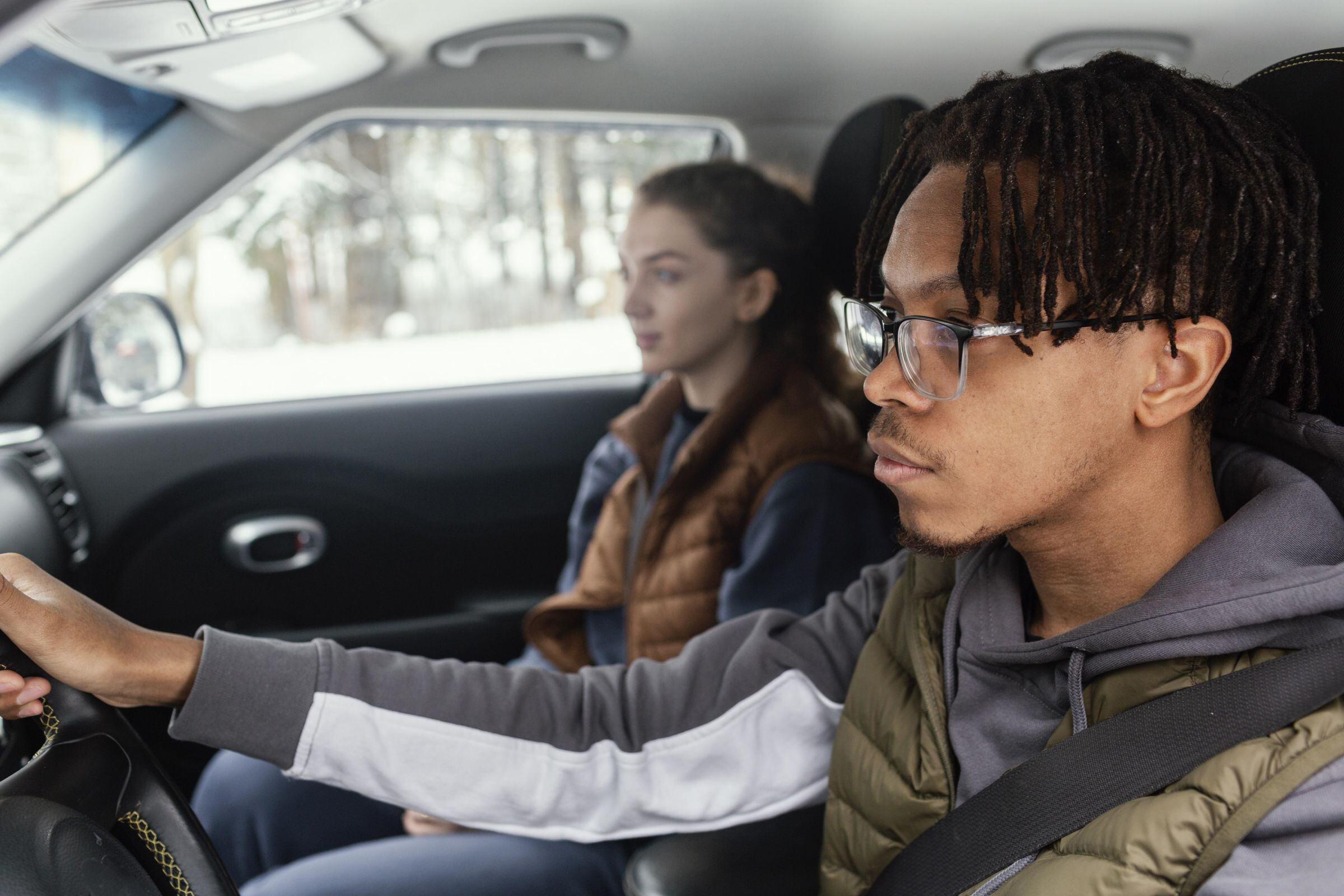
Remember: Four-wheel drive doesn’t mean four-wheel stop! It may help your car move through snow, but it won’t prevent skidding or help you stop faster on ice. Be extra careful during the first snowfall of the season.
GIVE YOURSELF MORE SPACE!
In winter weather, stopping takes longer! Give yourself extra room by staying at least 5–6 seconds behind the car in front of you. If roads are icy or slippery, leave even more space.
- Start braking earlier when approaching stop signs, traffic lights, and turns.
- Never tailgate! Give yourself time to react if the car ahead suddenly stops.
- Watch for other drivers who may slide or lose control.
- Watch out for snowplows! They make wide turns, stop often, and blow snow. Give them plenty of room and never pass unless it’s safe.
KNOW WHAT TO DO IF YOUR CAR STARTS TO SKID!
Hitting a slippery patch of road can happen to anyone. If your car starts to skid, stay calm!
- Take your foot off the gas.
- Look and steer in the direction you want your car to go.
- Avoid sudden turns or slamming on the brakes.
CHECK FOR RECALLS AND STAY INFORMED!
Before winter hits, make sure your car is safe to drive. Check for open safety recalls by entering your VIN (Vehicle Identification Number) at the NHTSA Recall Lookup Tool. Some repairs may be free!
What if you get stranded?
- Stay inside your vehicle if it’s safe.
- Make sure other drivers can see you (turn on hazard lights).
- Call for help immediately.
- If you need to run your car for heat, make sure the exhaust pipe is clear of snow. Run the engine sparingly and crack a window for fresh air.
DRIVE SAFER WITH CIESC DRIVERED SAFETY!
Winter driving can be tricky, especially for new drivers. The key to staying safe is being prepared, staying calm, and practicing good defensive driving habits.
At CIESC DriverEd Safety, we’re here to help build confidence through online learning and hands-on behind-the-wheel lessons with experienced instructors.
ICE AND SNOW, TAKE IT SLOW. SAFER DRIVERS, SAFER ROADS!