
Rain, rain, go away! Driving in the rain—whether it’s a drizzle or a severe downpour—is one of the worst driving conditions we encounter regularly here in the Midwest, no matter the season. In fact, if you’re going around 35 mph, it only takes 1/12th of an inch of rain to hydroplane. Since rainy conditions, such as heavy downpours and slick roads, are directly associated with higher accident rates, knowing the safety precautions can help you avoid a potential accident. Let’s review some best practices for safely driving in the rain and storms.
Check the Weather Before You Drive
Before hitting the road, take a minute to check the weather forecast. It may seem like a small step, but it can help you avoid severe conditions and dangerous routes. Use a weather app or tune in to radio alerts so you know what to expect. If you have a long trip ahead of you, check the weather radar to see which way the storm is moving. There is a big difference between passing through a light shower and driving directly into the heart of a storm; knowing what’s ahead helps you plan accordingly.
If Possible, Wait Until the Weather Improves
If the weather conditions are making you uncomfortable, determine if you can postpone your trip or commute. This way, you can wait until the weather improves, and you won’t have to add anxiety to your trip. For instance, if it’s raining so hard that you can’t see across the street, use your better judgment and wait to drive. Whatever you might be late to is far less important than your safety and well-being! There’s no reason to put yourself in potential danger if commuting in wet conditions is avoidable.
Mentally Prepare Yourself to Drive in Stormy Conditions
If severe weather is imminent, it is best to postpone your trip. However, if you must drive, ensure you are mentally prepared:
- Check your vitals: Hunger or fatigue can make a stressful drive much worse.
- Center yourself: Take a few deep breaths before starting the engine to ensure you are calm and focused.
- Listen to your body: If you feel overwhelmed, pull over to a safe spot and take a break.
Being physically and mentally prepared is just as important as checking the weather when conditions get tough.
Remember that getting mentally prepared to drive in challenging weather conditions can take time. The good news is that the more you do it, the less anxiety you will have surrounding driving. Confidence and comfort come with experience over time, so be patient with yourself, and don’t get discouraged if you don’t quite feel ready to hit the road when it’s raining.
Double Check Your Car’s Equipment
This is a huge one! Preferably, before you have to drive in the rain, check up on your car’s equipment. Check your headlights, taillights, and windshield wipers to make sure everything works as it should. And don’t forget to check the tread of your vehicle’s tires, as balding tires can severely reduce traction on wet roadways. Traction is your best friend when it comes to driving safely in the rain, so consider getting all-weather tires or relatively new tires with deep tread.
Although this step is optional, using a water-repellent spray can make a huge difference in your driving experience. Products like Rain-X are great for preventing a blurry or foggy windshield. However, keep in mind that using these products should be a part of your regular car maintenance routine and work best if you apply them prior to inclement weather. You can also purchase windshield wipers that offer all-weather protection and are a bit more durable than your average wipers. It’s all about preparation!
Shift Into Gear: Keep It Slow and Steady
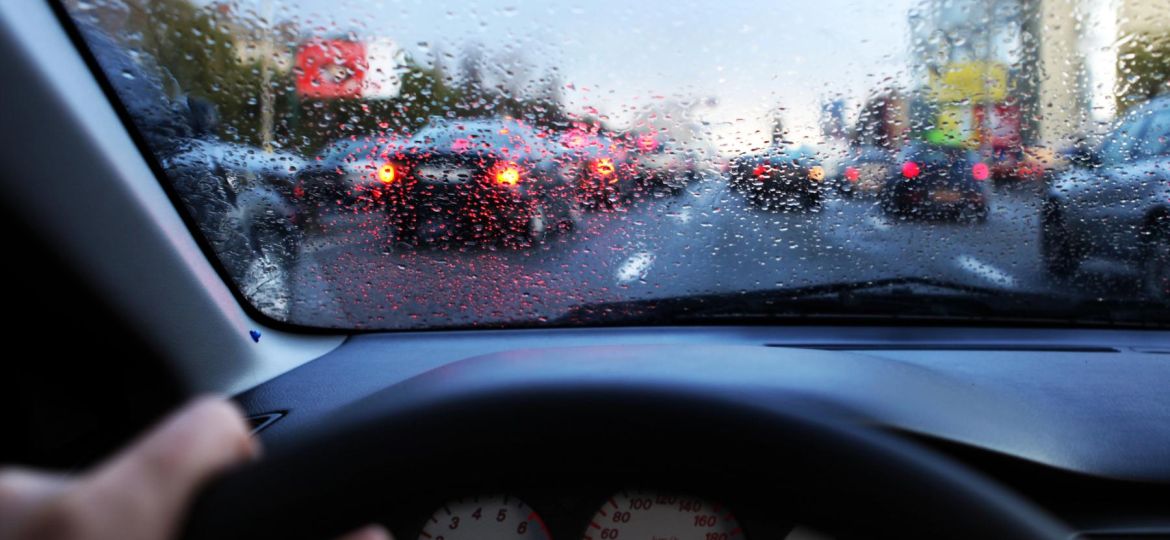
Not only should you go the designated speed limit when driving in wet weather conditions, but you should also practice driving much slower than usual if your visibility is limited. Wet roads are dangerous because the rain creates incredibly slick conditions, and on top of that, your vehicle’s braking distance is much longer in the rain. When the roads are dry and clear, a good rule of thumb is to maintain a following distance of at least three seconds with the vehicle in front of you. However, when the roads are wet, you should increase your following distance to four to six seconds to account for reduced traction and longer stopping distances.
Driving slowly and cautiously is the best way to keep you and others safe. If other drivers want to go a bit faster, they can go around you! Just make sure that if you decide to reduce speed, you get over into the right-hand lane, so other cars are able to pass you.
Reduced speed is also critical to avoid hydroplaning in rainy weather. This is when your vehicle slides uncontrollably on the wet road. If this happens to you, do not slam on the brakes! The best thing you can do is ease off the accelerator and continue driving steadily in the direction you need to go, steering no more than what is necessary.
What to Do If You Can’t See
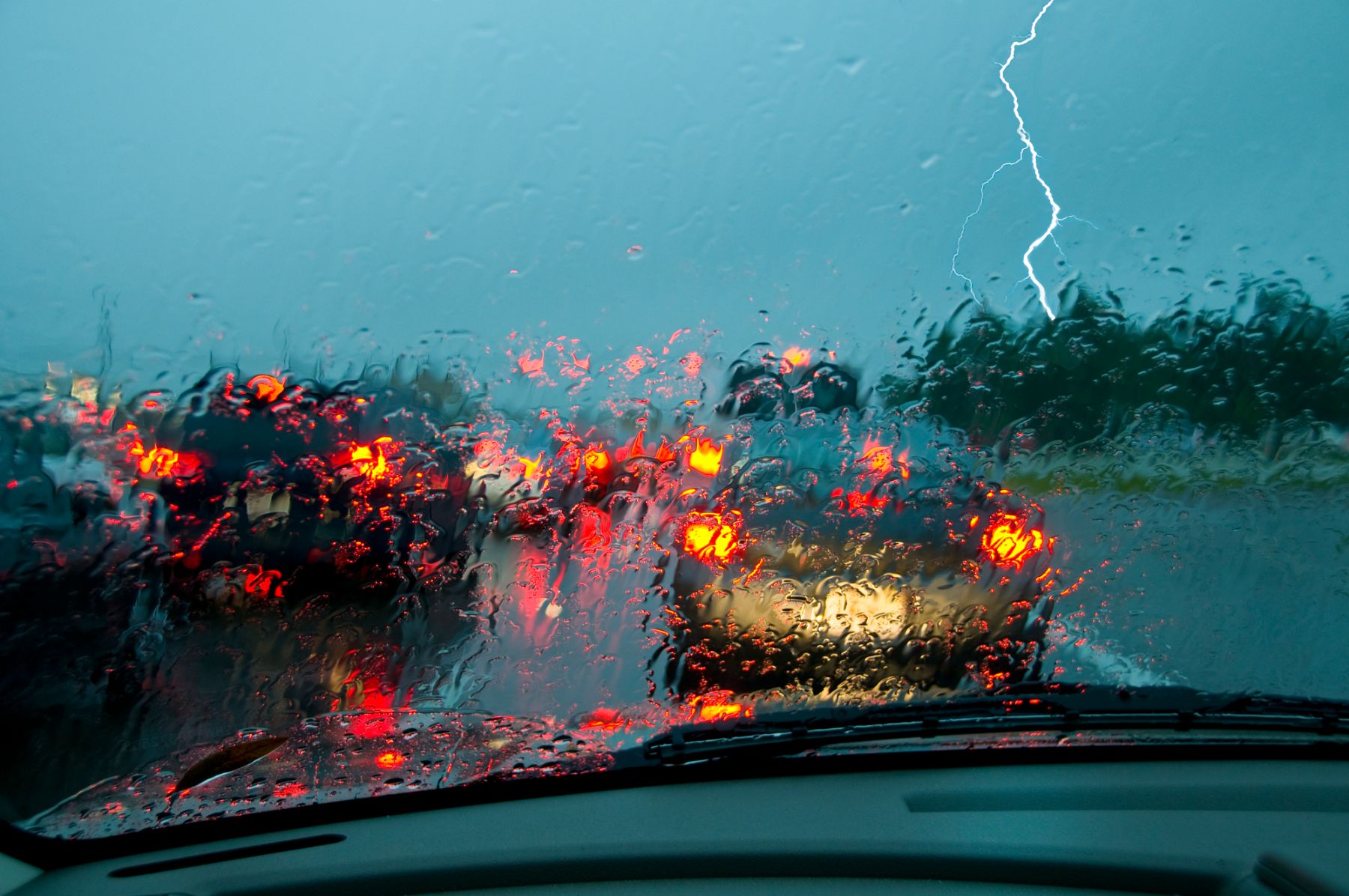
Heavy rain can make it nearly impossible to see the road. If your visibility drops, slow down and pull over safely. Turn on your hazard lights so other drivers can spot you. Try to move onto the shoulder of the road or into a parking area rather than stopping in a traffic lane.
As the wind and rain pick up, your first instinct may be to seek extra shelter when pulling over. However, you should avoid parking under a bridge or overpass. Winds from certain directions can accelerate and intensify when forced into narrow spaces (known as the Bernoulli effect), leaving you more vulnerable to high-speed winds. Parking in these areas can also block traffic and slow down vehicles that are approaching from behind.
Remember that your vehicle acts as your protective shelter, and your best option is to exit the highway or main road to park in a less crowded area, if possible.
Skip the High Beams in Rain
Many drivers believe that high beams help them see better in the rain, but they actually have the opposite effect. The light reflects off rain droplets and creates glare, making it harder to see. According to our night driving safety tips, low beams are a much better choice in rainy conditions. They light the road more evenly without bouncing back into your eyes.
Beware of Standing Water & Flooded Roads
It’s important to know that hydroplaning can also occur when driving through standing water. To prevent this altogether, try to avoid driving through areas where standing water has collected—whether that’s big puddles, road shoulders, or streets with poor drainage. Another example would be if you’re driving along a three-lane highway and you notice large pools of water building up in the right lane, switch to the other, clearer lanes instead to reduce the risk of sliding.
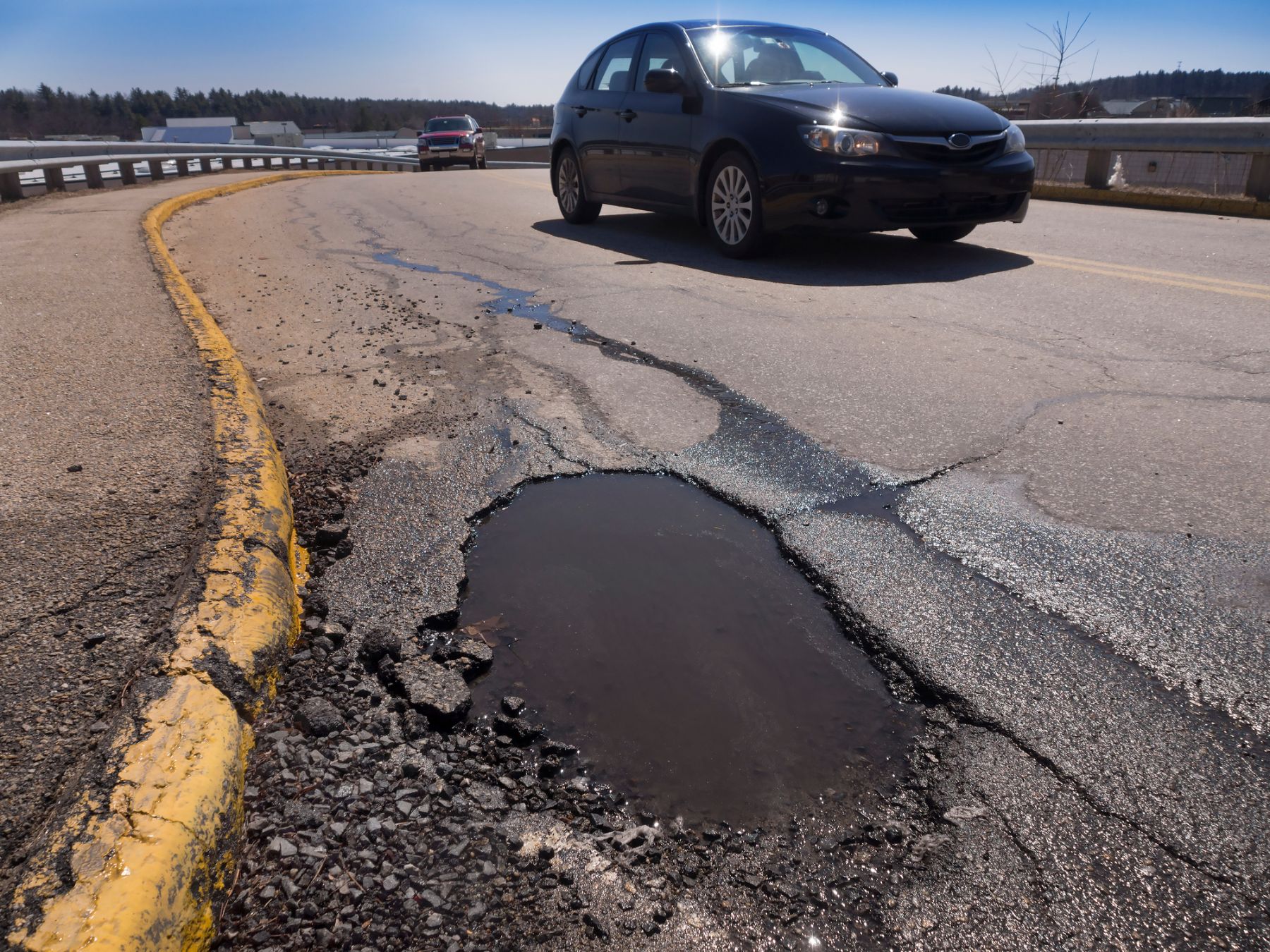
Let’s not forget about those sneaky potholes that seem to pop up out of nowhere! Beware of pothole puddles, which are typically hard to spot from a distance because they mimic regular puddles. Although it’s not always possible to dodge these pothole puddles, the slower you cross them, the better the outcome for you and your vehicle. Without taking caution first, you could accidentally do severe damage to your vehicle.
If you’re in the middle of your drive when a storm hits, be cautious of flooded roads—they are more dangerous than they look. Even six inches of water can cause you to lose control, and a foot of water is enough to float most cars. If you see water covering the road, it’s best to turn around. Underestimating floodwaters can leave you stuck and in danger. Don’t hesitate to play it safe and take a different route.
Be Careful With Wind Gusts
Storms often bring strong winds, especially in open areas or on bridges. These gusts can push your car around, particularly if you’re driving a van, SUV, or truck. Grip the steering wheel firmly and reduce your speed to maintain control. Maintain a safe distance between your vehicle and other vehicles. It’s all part of driving with awareness and adjusting for changing conditions.
Ventilate Your Car for Stronger Visibility
Rain increases humidity, which can fog your vehicle’s windows and make it difficult to see out. Most modern vehicles have built-in ventilation systems that include a function to reduce the fog that forms on the interior of your windows and windshield. If your car doesn’t have this type of mechanism, you can try to roll your windows down a bit to allow some ventilation. If conditions get too bad and you can’t see out of your windows, however, be sure to pull over somewhere safe and give your windshield a good wipe down with a spare towel.
Prepare to Drive During All Seasons with Driver Ed Safety
Driving in wet and stormy conditions requires patience, focus, and caution. Slow down, keep both hands on the wheel, and leave plenty of space between you and others. Make sure your lights are on, but use your low beams in the rain. And if the weather conditions become too intense, don’t be afraid to pull over safely and wait it out.
Want to be even more prepared? Learn how to protect your car from pothole damage and stay up to date on Indiana’s “Slowpoke Law.” Staying informed helps you make safer decisions on the road, no matter the weather.
Driver Ed Safety offers an Online Course, Behind-The-Wheel lessons, and administers the Road Skills Test, teaching students how to develop defensive driving and behavior patterns to stay safe on the road. Get started today!