

Whether you’re itching to get into the driver’s seat or feeling a little hesitant, driving can be nerve-racking, especially in the first few months. No one is going to ace it the first time they’re behind the wheel. As humans, it’s natural to feel some anxiety about new or uncertain experiences. Driving is a huge responsibility, and it takes time to learn the ropes. There’s a reason why they don’t just hand out your driving permit at the BMV—you have to earn it.
The process of earning your driver’s license involves educational tasks to ensure you’re equipped with the skills to be a safe, defensive driver. From supervised driving to road test prep, gaining experience here helps build confidence and alleviate some of that anxiety. In fact, to obtain a learner’s permit or driver’s license in Indiana, qualifying teenagers must meet specific driving requirements. These driving requirements consist of 50 hours of driving practice, 10 of which must be completed at night.
Going from no driving experience to 50 hours behind the wheel, this is definitely a big adjustment. Needless to say, busy parents and busy student drivers might find it hard to meet these requirements in a timely fashion, and any delay is likely to translate to a delay in earning that learner’s permit and then, eventually, even earning the official driver’s license. Not only will it take some planning to fit these hours into your busy schedule, but it might also require some mental preparation. That’s why we think it could help to have some mental tools in your toolbelt for those who are feeling a bit uneasy about learning to drive. Let’s discuss how to mentally prepare for driving with a permit while mastering your practice hours along the way.
Why Your Mental State Matters Before You Start the Engine
There’s absolutely no shame in being hesitant about driving. If you were to describe modern driving to those living in the days of Model Ts, they’d probably call us speed-crazed hooligans. When broken down, the thought of driving a car can seem quite scary. So, it’s okay to be nervous. Since the main source of travel around the world is via an automobile, driving is an incredibly valuable skill to have—that’s why we want to help you overcome your fear.
Before starting the ignition, follow mental preparation techniques. Take a few deep breaths and ensure your car is ready to be driven. Check your mirrors, locate your turn signal, lights, and don’t forget your seat belt! Next, review the major rules of driver education before putting your vehicle in drive. Being prepared is a great way to reduce some of those pre-driving jitters.
Knowing what to expect on the road and learning how to care for your vehicle will help you be a proactive driver rather than a reactive one. On the road, do not feed into your anxious thoughts. Be a proactive, defensive driver. Mentally preparing for driving practice will help you if you have limited time to make a decision. If you’re not able to think critically about your next steps (directions, road closures, detours, weather), you may be stressed, which could lead to a mistake. Overcoming anxiety when learning to drive isn’t easy. Being confident behind the wheel takes practice, which, don’t worry, you’ll get plenty of in those 50 hours!
Limit Distractions Before Getting Behind the Wheel
While you’ve probably heard a million times that you’ll need to limit distractions while driving, we’re here to tell you one more time: NO DISTRACTIONS WHILE DRIVING.
Nine people in the United States are killed every day in crashes that are reported to involve a distracted driver. Anything that takes your attention away from driving is a distraction. As we mentioned earlier, while things like breathing exercises or singing your favorite song on the radio won’t derail your focus too much, there are some things you should definitely avoid to follow safe driving practices. These include:
- Texting
- Talking on the phone (yes, even hands-free calling)
- Eating
- Distractive, loud conversations
- Using a cell phone
- Selecting music
- Using a navigation system
Taming the “What-Ifs”: Overcoming Driving Anxiety
It’s natural to have fears about driving, and it’s very common. Turning left at a stoplight, driving on the interstate, merging, or the fear of driving itself are worries for millions of drivers when they first earn their learner’s permit. The takeaway here is that you’re not alone.
If you’re nervous during driving practice, try to calm your thoughts and focus on the things you see, hear, and feel. Mental preparation for teen drivers is different for everyone. Try out a few exercises and stick with what works for you! For example, watch the street in front of you, feel the steering wheel in your hand, etc. Do your best to focus and drown out the “white noise.”
Deep breathing exercises can also help you overcome driving anxiety. Since breathing is something we already do, it’s a great, non-distracting way to clear your mind of worry while driving. Slowing your breathing also increases your brain’s oxygen supply, allowing you to think more clearly. Inhale through your nose for 10 seconds, and then exhale through your mouth for 10 seconds.
Try using the destination-focused mindset. A destination-focused mindset prioritizes reaching your destination safely and efficiently. It involves being proactive, setting your GPS and any other controls before shifting into drive. This goal-oriented mindset eliminates distractions and remains calm throughout the drive. As you understand how to mentally prepare for driving with a permit, a destination-focused mindset can help you keep a purposeful, focused headspace on the road.
And remember: if the road ahead becomes too daunting, it’s always okay to safely pull over. Make sure you turn your flashers on and give yourself some time to gather yourself.
The Power of Positive Visualization
As you gain driving practice, test out positive visualization techniques to boost your confidence and prepare for driving. Do not distract yourself with this technique; complete it before driving.
Close your eyes and imagine you’re in the driver’s seat. If you’re completing supervised driving, imagine your supervisor in the passenger seat. Now, imagine yourself going through the motions of checking that your vehicle is ready, then shifting into drive. Picture yourself driving your route. Imagine each step completed successfully, using turn signals, merging, and finally arriving safely at your destination. These positive visualizations are great tips for first-time drivers with a permit. Picturing success while driving helps new drivers learn to believe in themselves and anticipate what’s coming, so they’re better prepared.
Transitioning to the Open Road: Slow & Steady
The more you avoid driving practice, the more you’ll associate the act with anxiety, further enhancing your fear. Now that you’ve earned your learner’s permit and are enrolling in driver education, it’s time to hit the open road, completing your supervised driving.
Using your mental preparation techniques, it’s time to tackle the 50 hours of your driving log. Think about having a good driving experience each time you practice driving—and help facilitate this by driving in places you know well and are easy to navigate. As your comfort level builds, try adding a new feature slightly outside of your comfort zone that still feels manageable. An example could be taking on a four-way stop at a busier time of day or using a roundabout with more than one lane.
Take it slow, and don’t push yourself—the road isn’t going anywhere! For many people, having a firm grasp on the rules of the road calms their nerves substantially.
Strategies for Guardians to Help Complete Supervised Driving Hours
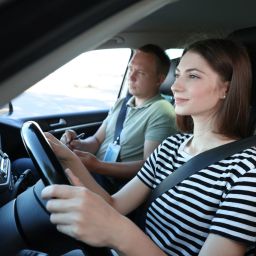
Having a driving permit doesn’t mean students are ready to be independent drivers. There are still quite a few steps in between. A large one is supervised driving hours. These 50 practice hours are integral to learning how to be a defensive driver. They also help students learn to mentally prepare for driving with a permit through practice.
So, guardians, what can you do to help your student meet these driving requirements? We put together some ideas and tips on how to reach 50 practice hours. Here’s a closer look:
Short Trips, Errands
A short trip to the grocery store, gas station, hardware store, or carry-out restaurant is unlikely to bank any significant behind-the-wheel time, but keep in mind that every little bit of driving practice helps. Even if it’s just to the local grocery or to drop off a letter at the post office, let your teenager put their driving permit to use. As we said, sometimes it’s a bunch of little trips that can help them meet their requirements rather than one or two big trips. One good thing about driving short trips and running errands is that they’ll gain experience in busy parking lots and may even have to navigate downtown areas with many pedestrians. It’s all good practice.
Commuting to Extracurriculars
If you’re a busy parent or have a busy teenager, then chances are your evenings are spent driving from one activity to the next. There might be dance class, football practice, theater rehearsal, band practice, and more that you have to get your kids to, night in and night out. Try letting your teenager drive to these. Given how busy they are and how many activities they’re involved in, this is a great way to help them hit their hours. Things can get even busier if you have other children who are also participating in after-school activities. What’s nice about many of these activities is that they’re likely to end after dark, which can help them meet the nighttime driving requirement of 10 hours in their driving log.
Road Trips
Road trips are a great way to bank some serious supervised driving hours. It can also help share some of the driving load, making things easier for parent drivers. So whether you’re taking a ride to grandma’s house hours away on the west side of the state or a long, cross-country road trip, make sure that your teenager gets some solid driving practice in. As an added bonus, much of this driving is likely to be on the highway, which is good practice and differs from the city and suburban environments.
Keep in mind that some states do not allow out-of-state permit holders to drive. So always review the driving laws of any state you’re driving through.
Family Gatherings
Getting together with friends and/or family to celebrate a birthday, holiday, or simply to hang out. It’s a great opportunity to let your student driver get behind the wheel and show off their learner’s permit. While these may be few and far between compared to driving for extracurricular activities and short errands, they can still make up a significant chunk of your student driver’s driving log. And just think of how cool your teen will feel when your family and friends see them behind the wheel when your car pulls up to the event.
Remember, when it comes to helping your student driver reach their driving log requirements, it’s not just one or two trips that will help them meet the 50-hour requirement. There’s likely going to be a lot of short trips that add up to 50 hours in the end. That said, make sure your student driver gains experience driving in different environments and at different times of day to give them a more well-rounded experience.
How Guardians Can Support (Not Stress) Student Drivers
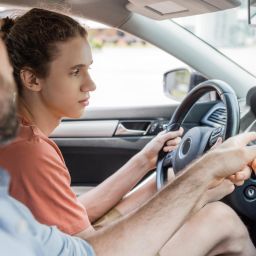
Okay, now that your student is in the driver’s seat, here’s where a guardian’s job really begins. Driving with a learner’s permit is scary. Even if your student driver doesn’t show it, they might be nervous. Following a guardian support guide helps you teach your student how to mentally prepare for driving with a permit and apply proactive, defensive driving tactics on the road. Focusing on patience and supportive coaching will make supervised driving a positive learning experience. Remember, it’s not all on you. The benefits of professional driver education programs are that your student driver will also be with a professional driving instructor for a portion of their hours. Nevertheless, staying calm, even if it’s not second nature, is imperative for the student’s safety.
Creating a Calm In-Car Environment
A stressed-out student driver isn’t ideal for driver education tips or driving practice. While a parent or guardian can’t eliminate all anxiety for a student driver, they can help reduce it. Here’s how parents can help student drivers stay calm.
Lead by example: Appearing calm and collected signifies to your student driver that they have nothing to fear. Even if you yourself are riddled with anxiety, try not to overwhelm your driver with these emotions.
Practice defensive driving techniques: If your student driver is constantly in the car while you are behind the wheel, they’re likely taking notes, even if it’s subconsciously. Studies show teens whose parents drive distracted are two to four times more likely to participate in distracted driving themselves. Drive the way you want your student to drive.
Create a calm environment: Remove distractions from the vehicle, including music, notifications, and extra passengers. If it’s not possible to be in the vehicle with just the two of you, firmly express to any passengers that they must be quiet throughout the ride.
Clarify questions and logistics in advance: Explain your route to the student before they set off, giving them advance notice of any tricky points, such as congested roads or merging. You should still direct them throughout the journey, but explaining it in advance helps to alleviate anxiety and uncertainty.
Answer questions: Your student will likely ask for help or clarification at some point. Calmly answer their question, but note that over time, they need to build confidence—and not constantly seek reassurance.
The Road to Freedom: Why Every Hour of Practice is Worth It
At first, 50 hours of practice might seem like it’ll never end, but time will pass faster than you think. Every hour of practice will help you become a better and more confident driver. Before you know it, your graduated driver licensing program will be over, and you’ll unlock a newfound freedom.
Graduating from a learner’s permit to a driver’s license opens so many doors. It’s a skill you’ll use for the rest of your life, and its benefits will only grow as you get older. With an official driver’s license, you don’t have to rely on others to transport you around. School, work, clubs, and extracurricular activities become more accessible and convenient when you can drive yourself. The world is your oyster!
Now, as you learn how to mentally prepare for driving with your permit, keep in mind you’re building the skills and confidence that will allow you to drive yourself to your favorite club, hang out with friends, or any of the other adventures that lie ahead, all because of the freedom that comes with a driver’s license.
Take the Next Step: Join Our Certified Driver Education Program
Mentally preparing for driving can take many forms, but one of the most effective ways to build confidence and feel ready behind the wheel is through consistent practice and education. Driver Ed Safety offers BMV-approved programs, including our Online Course and Behind the Wheel training, so students develop effective defensive driving and behavioral patterns, allowing them to be the best drivers they can be. Get started today!
FAQs
How can I stop being nervous about driving with a permit?
Unfortunately, there’s no straightforward cure for being nervous about driving with a permit. However, feeling prepared through education courses and practice can reduce anxiety, as can using breathing techniques, practicing mindfulness, and positive visualization. All of these tactics can help decrease anxiety when driving with a permit.
What is the best way to mentally prepare for my first drive?
The best way to mentally prepare for your first drive is to practice relaxation techniques, review the rules of the road, ensure your vehicle is ready, proactively adjust any navigation or vehicle settings, and visualize yourself successfully reaching your destination.
How do I make the most of my supervised driving hours?
Make the most of your supervised driving hours by asking questions and driving on a wide range of roads, neighborhoods, and times of day. As you feel comfortable, try to gain experience with new highways, roundabouts, and other challenges during this time.
When should a student driver ask for help?
A student driver should ask for help immediately when feeling overwhelmed, panicked, or unsure of what to do. Proactively seeking help can de-escalate situations before they lead to a mistake on the road. Remember, you’re still learning, and asking questions helps you become a better driver.
How can parents support a student driver with a permit?
Parents can support a student driver with a permit by encouraging them to gain driving experience and by creating a calm, educational environment for learning. Answer their questions and be a positive example of a safe, defensive driver.